
FedeGraziani

FedeGraziani
About the winery
I have dedicated my life to wine, to getting to know and appreciate it, trying to understand its boundless complexity. Each wine is a world unto itself, which lives, grows and changes as humans do, acquiring over time a personality that makes it unique and different from any other wine.
Loving a wine is like loving a person: to do so, we must let go of our prejudices and learn to understand and accept the myriad facets of his character, with the complete honesty and respect he deserves.
BEST ITALIAN SOMMELIER
It was 1990 when, at the age of 15, I decided to take my first wine tasting course to pursue my passion: a passion that would soon become my profession and radically change my life.
A professional wine taster since age 19, at age 23 - in 1998 - I won the AIS (Italian Association of Sommeliers) competition as the best Italian sommelier, an achievement that allowed me to work at a high level with Gualtiero Marchesi, Stefano Cavallini, Bruno Loubet, Carlo Cracco, Aimo and Nadia Moroni.
SALVO FOTI
Curiosity and a desire to improve led me to continue my studies and obtain a degree in viticulture and oenology in 2006, the year I met Salvo Foti: it was our mutual friendship and appreciation that provided me with the opportunity and motivation needed to become a winemaker.
In parallel, I work as a consultant and popularizer. Since 2012 I have been working with wine company Feudi di San Gregorio as area manager for central and northern Italy.
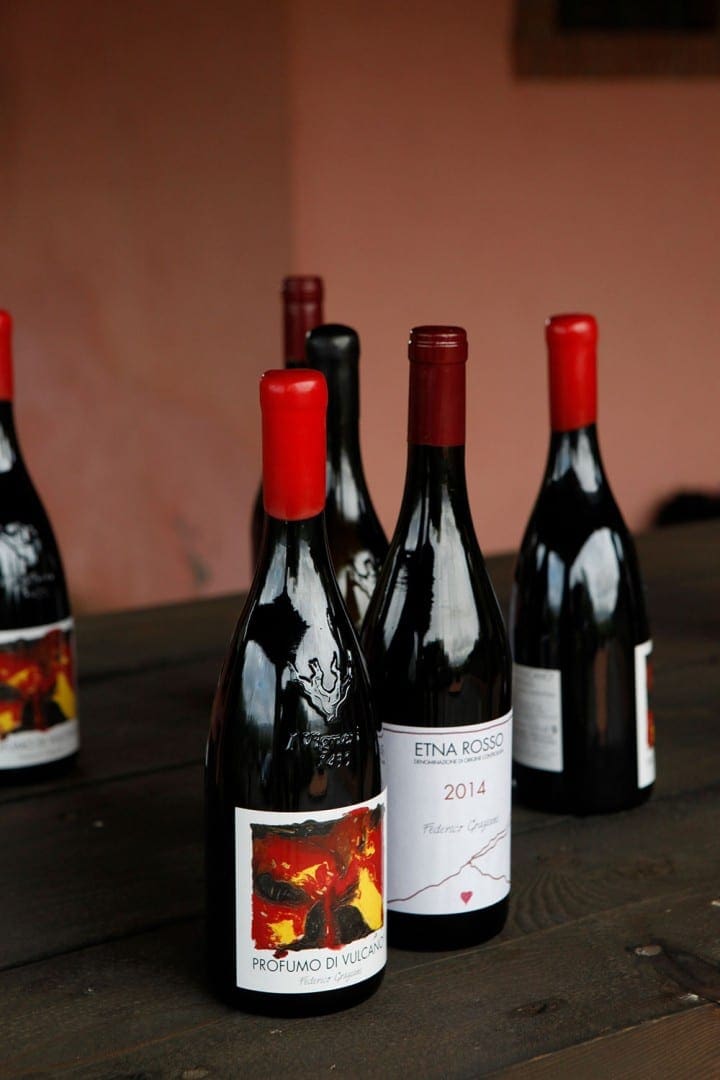
A TASTE OF ANTIQUITY
I chose to make wine in a difficult, impenetrable and wild area, which nevertheless boasts one of the richest winemaking traditions in Italy and Europe.
Etna is a land of ancient grape varieties, such as Nerello Mascalese, Nerello Cappuccio, Alicante and Francisi for red wines, and Carricante, Minnella and Grecanico for white wines.
The grapes are turned into fine wines with many unique characteristics and a remarkable history, wines that today are appreciated around the world for their distinctive character and qualities.
ALBERELLO
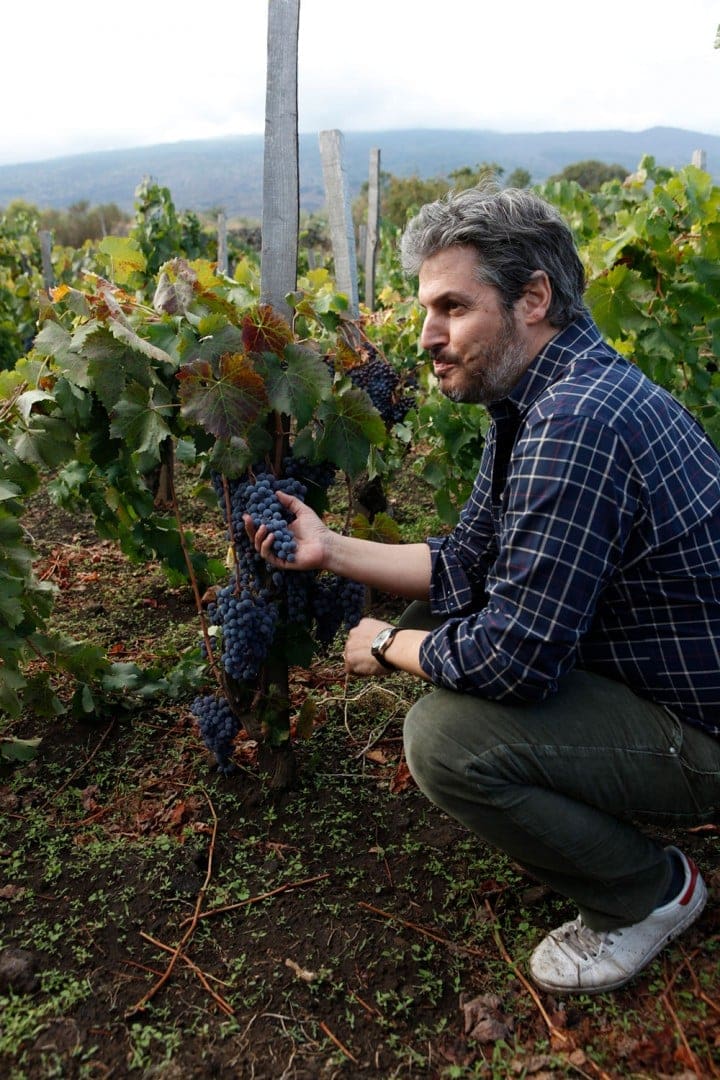
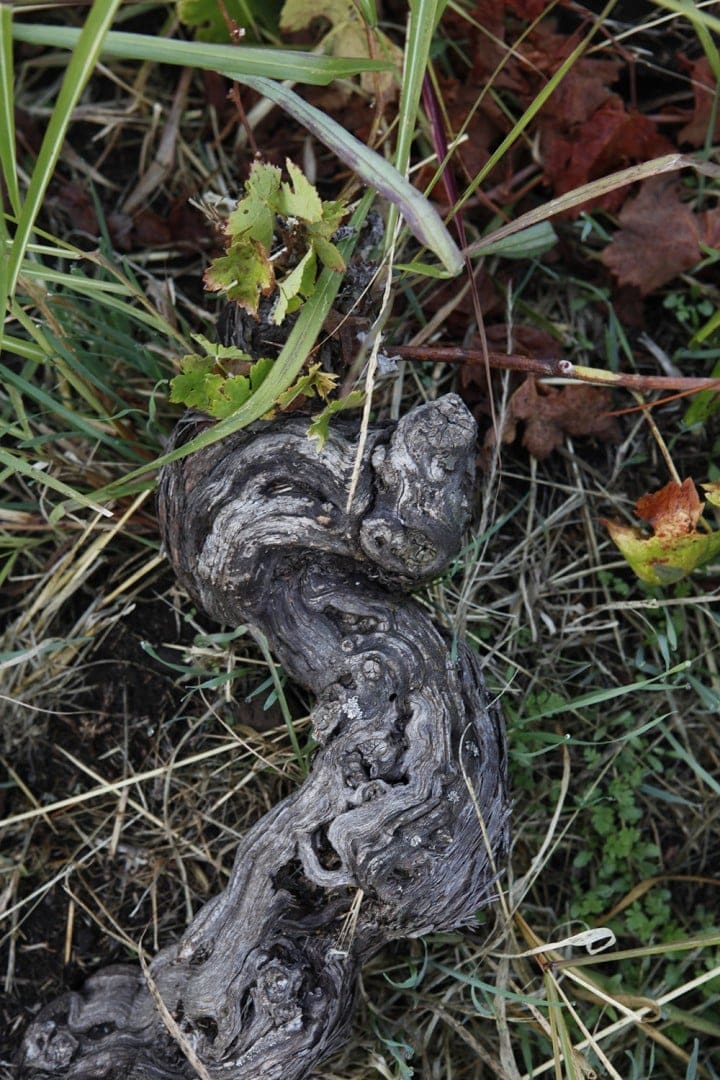
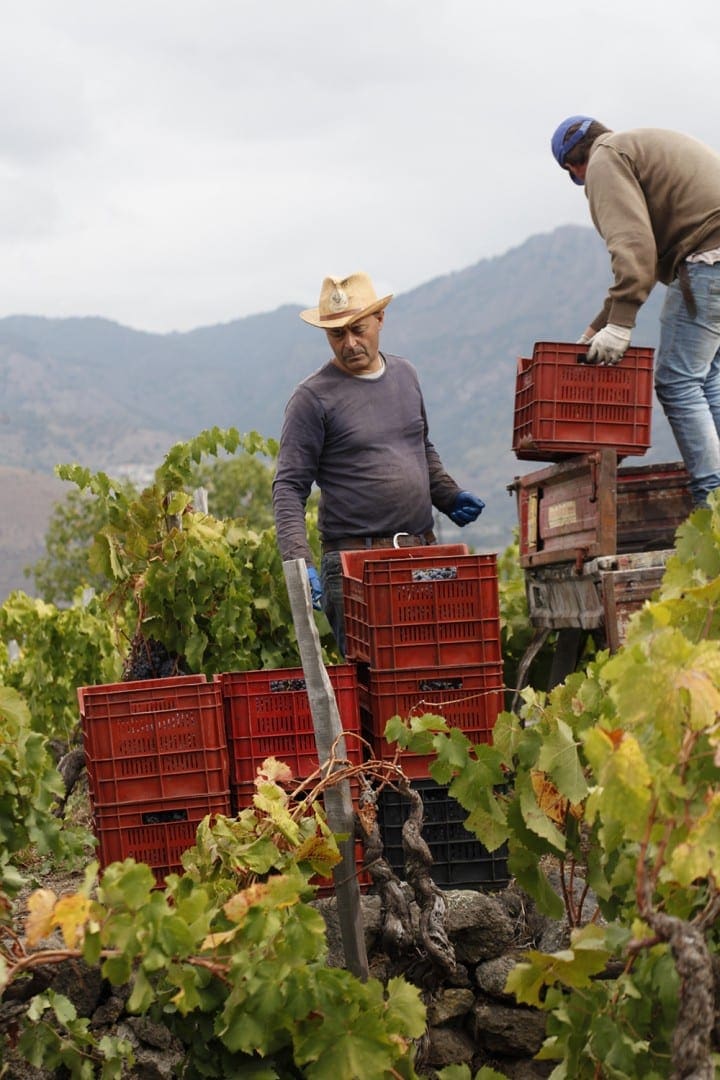
All my vineyards follow the traditional model known as alberello viticulture, typical of the Etna area. The vines are not arranged in rows: each is treated as an individual plant and placed equidistant from the others on all sides, supported by a chestnut pole.
This provides more space for the roots, better irradiation and ventilation, and geometry that makes pruning and harvesting easier - two activities that are still mostly done by hand. After all, a well-tended and healthy vine will produce good fruit.
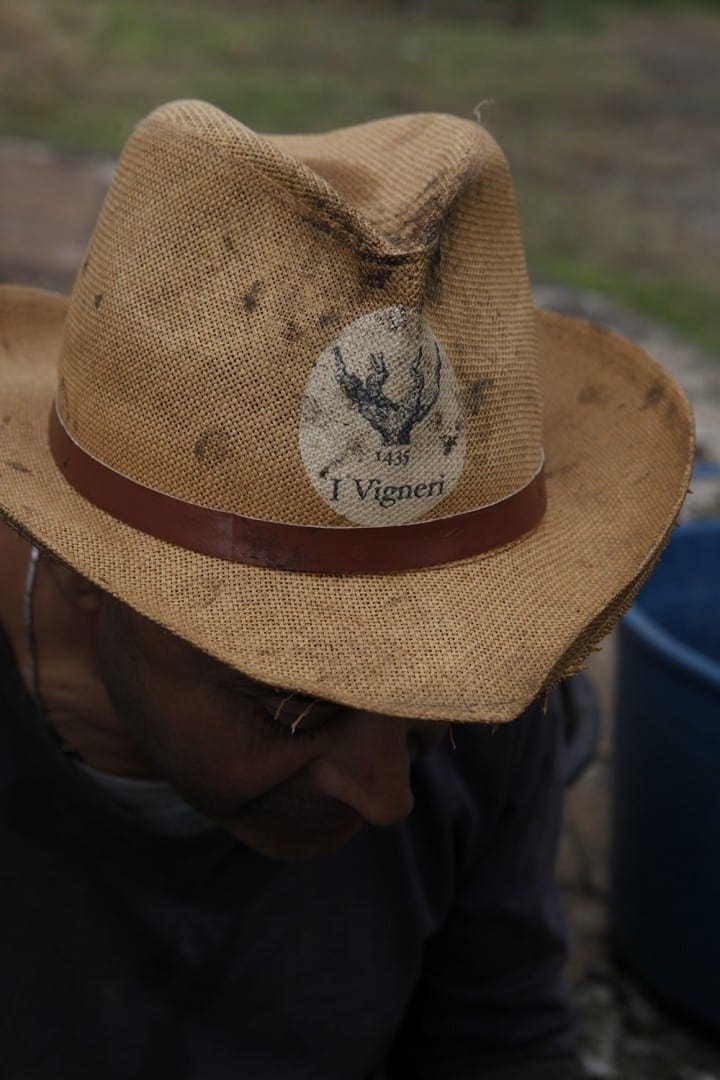
I VIGNERI
To tend my vineyards, I have chosen to rely on the experience of Salvo Foti and Maurizio Pagano, heirs to a tradition founded in the 16th century with the Maestranza dei Vigneri, or Winemakers Guild, the first association of its kind in the Etna area.
By using non-invasive methods and tools, and completely avoiding pesticides or systemic treatments, we strive to make the most of the invaluable heritage offered to our territory, working in a respectful and unhurried manner, in complete harmony with ourselves and the environment.